Chemical bonding in simple molecules
By Mahmuda Parveen
By the end of the lesson, students will be able to:
- Understand the concept of chemical bonding in simple molecules.
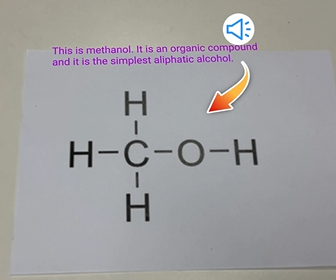
- Identify the chemical structures of ethanol (C₂H₅OH) methanol (CH₃OH) and propanol.
- Differentiate between covalent and ionic bonds, focusing on covalent bonding in organic compounds.
- Use MIXAP to visualize the molecular structures of ethanol, methanol and propanol.
- Explain the importance of chemical bonding in everyday substances.
Standards
Skills referential:
- The student can explain the molecular structure of individual substances using simple models.
- The student has knowledge about some atoms and molecules.
- After class 6 all Danish students have to have this knowledge about molecules. (Natur/teknologi page 7)
Teaching materials
- Printed molecular structure handouts
- Hand sanitizer (for real-world connection)
Steps
Introduction
Ask students: “Can you think of any liquid that is used in fuel, medicines, or hand sanitizers?”
Introduce ethanol and methanol as important alcohols used in daily life.
Show images or real samples of ethanol (hand sanitizer) and methanol (mention its use in fuel).
Explain that both are made of atoms bonded together in a specific way, and today, they will use augmented reality to explore them.
📌 Key Question:
“How do atoms join together to form substances?“
Activities
Activity 1 (15 min):
Exploring different alcohol properties:
Explore Different chemical bonds by viewing their molecular structures. Every group will get 1 molecular structure; they will use MIXAP to read information about the molecular bond.
How many carbon atoms are there in different structures?
What changes the prefixes of different alcohols?
Activity 2 (15 min):
Associating two images
Match the name of the molecule with the corresponding structure.
Evaluation
📌 Exit Ticket (Quick Quiz – Verbal or Written): each student needs to show the exercise sheet to the teacher when they have finished.
- What type of bond is found in ethanol and methanol?
- How many carbon atoms are in methanol?
- What makes ethanol different from methanol?
Notes
Ensure all students can access MIXAP before the lesson.
Pair students if devices are limited.
Keep explanations simple and relatable (use analogies).
Use AR as an interactive way to enhance engagement.